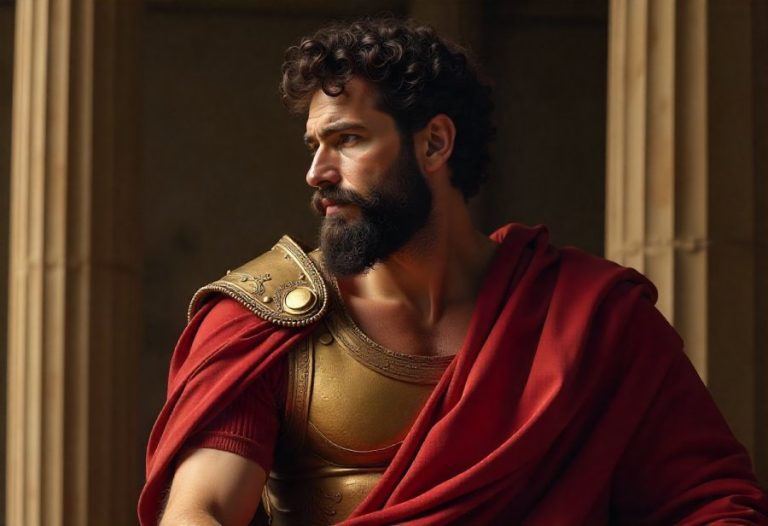
Discover how Alexander the Great’s extraordinary journey from a privileged Macedonian prince to a legendary conqueror reshaped history. His strategic brilliance, relentless ambition, and visionary approach to empire-building continue to captivate modern minds. But what truly set him apart was his ability to blend military innovation with cultural synthesis, transforming conquest into a legacy of lasting influence. His early education under Aristotle instilled a cosmopolitan outlook that fueled his desire to unite diverse civilizations, not just through territorial expansion but through cultural exchange and mutual influence. How can his timeless principles of decisive leadership, adaptability, and emotional intelligence guide today’s leaders amid rapid global change? Alexander’s story challenges us to consider whether greatness lies solely in conquest or in fostering shared progress, resilience, and true influence. His legacy urges a reevaluation of leadership—bold yet humble, strategic yet inclusive—leaving us questioning how to carry his lessons into the future.
Unveiling the Birth and Early Years of a Future Conqueror
Alexander the Great’s story begins amidst the fertile lands of Macedon, a kingdom perched on the fringes of the Greek world yet destined for extraordinary expansion. Born in 356 BCE in Pella, the Macedonian capital, his early years were shaped by a unique blend of privilege and rigorous preparation. His father, King Philip II, had already begun transforming Macedonia into a formidable military and political power through innovative reforms and shrewd diplomacy, laying a strategic foundation that would support Alexander’s future ambitions. Recognizing his son’s exceptional potential early on, Philip invested heavily in his education, blending martial discipline with a broad intellectual curriculum that would prove crucial as Alexander’s aspirations extended beyond Macedonia’s borders.
At the heart of his formative years was his tutelage under Aristotle, arguably the most influential philosopher of his time. Aristotle’s teachings went far beyond philosophy and natural sciences; they fostered curiosity, critical thinking, and an appreciation for the diversity of civilizations. It’s worth noting that Aristotle emphasized understanding different cultures and values—an influence that would profoundly shape Alexander’s approach to empire-building. This exposure to Greek ideas of progress and cosmopolitanism planted seeds of a vision that saw conquest not merely as territorial gain but as an opportunity for cultural exchange and synthesis. The foundations of Alexander’s later ambition—to forge a vast, interconnected empire—can be traced directly to this early intellectual environment.
The political landscape of Macedon during his youth was a complex web of internal rivalries and external threats. Macedonia remained somewhat peripheral compared to the major Greek city-states, yet Philip’s strategic reforms and military innovations created a powerful, unified state eager to project influence. Alexander grew up observing court politics firsthand, learning the importance of leadership, loyalty, and resilience from his father’s campaigns. These experiences fostered a confidence and decisiveness that set him apart from many peers, often prompting him to take bold initiatives that exceeded expectations for someone so young. Such qualities—combined with his exposure to military strategy—shaped a leader eager to challenge the limits of his environment and carve his own destiny.
This privileged upbringing was balanced by the weight of responsibility. As heir to the throne, Alexander had access to wealth, influence, and a top-tier education, but he also bore the expectations of his family’s legacy. The duality of privilege and duty cultivated resilience and strategic thinking, preparing him to face the formidable challenges ahead. His early decisiveness and confidence became evident in interactions with courtiers and military advisors, where he often demonstrated a willingness to act boldly and independently. These traits, along with his rigorous training and exposure to campaign life, laid the groundwork for a leader capable of inspiring loyalty and undertaking audacious ventures.
His practical engagement in warfare from a young age was no mere theoretical exercise. Alexander accompanied his father on campaigns, gaining firsthand insights into military reform, tactics, and leadership under fire. Philip’s reforms had already demonstrated that Macedonia could challenge Greek city-states and, ultimately, Persia. Alexander’s direct involvement in these campaigns sharpened his tactical acumen and deepened his belief in the possibility of conquest. This early military exposure was vital, not only for honing his skills but also for reinforcing his confidence in Macedonia’s capacity to expand far beyond its borders. It was a formative period in shaping a leader who would soon command one of history’s most legendary armies.
The broader geopolitical context further fueled Alexander’s ambitions. Macedonia’s internal reforms and military innovations created a rising power, with Persia looming as the ultimate target. Conquering Persia was not just a military objective but a symbolic act—a declaration of Greek supremacy and a step toward unifying the fragmented Greek world under Macedonian dominance. The convergence of internal strength, external threats, and cultural influences created a fertile environment for Alexander’s extraordinary campaigns. His early life, therefore, was not merely about personal development; it was about laying the groundwork for a legacy that would forever alter the course of history.
Foundations of Power: Macedon’s Rise and Alexander’s Formative Years
Born in 356 BCE in Pella, the Macedonian capital nestled at the northern edge of Greece, Alexander’s early years were shaped by a distinctive combination of privilege and rigorous preparation. His father, King Philip II, was already transforming Macedonia into a formidable military and political force through innovative reforms and shrewd diplomacy, setting a strategic foundation that would support Alexander’s future ambitions. Recognizing his son’s exceptional potential early on, Philip invested heavily in his education, ensuring he received a blend of martial discipline and a broad intellectual curriculum. This combination would prove vital as Alexander’s aspirations extended well beyond Macedonia’s borders.
Central to his formative years was his tutelage under Aristotle, arguably the most influential philosopher of the era. Aristotle’s teachings stretched far beyond philosophy and natural sciences; they fostered curiosity, critical thinking, and an appreciation for cultural diversity. It’s notable that Aristotle emphasized understanding different civilizations and their values—an influence that would profoundly shape Alexander’s approach to empire-building. This early exposure to Greek ideas of progress and cosmopolitanism planted the seeds of a vision that saw conquest as an opportunity for cultural exchange and synthesis, rather than mere territorial gain.
The political landscape of Macedon during Alexander’s youth was complex, marked by internal rivalries and external threats. Macedonia still lingered on the periphery compared to the major Greek city-states, yet Philip’s strategic reforms and military innovations created a unified, powerful state eager to project influence. Alexander grew up observing court politics firsthand, learning the importance of leadership, loyalty, and resilience from his father’s campaigns. These experiences fostered a confidence and decisiveness that set him apart from many peers, often prompting him to take bold initiatives that exceeded expectations for someone so young. Such qualities—paired with his exposure to military strategy—shaped a leader eager to challenge the limits of his environment and carve out his own destiny.
This privileged upbringing was balanced by the weight of responsibility. As heir to the throne, Alexander had access to wealth, influence, and a top-tier education, but he also bore the heavy expectations of upholding his family’s legacy. The duality of privilege and duty cultivated resilience, strategic thinking, and a sense of divine purpose. His early decisiveness and confidence became apparent in interactions with courtiers and military advisors, where he often demonstrated a willingness to act boldly and independently. These traits—alongside his rigorous training and firsthand experience in campaigns—laid the foundation for a leader capable of inspiring loyalty and undertaking daring ventures.
His practical engagement with warfare began at a young age, far from being theoretical. Alexander accompanied his father on campaigns, gaining firsthand insights into military reform, tactics, and leadership under fire. Philip’s reforms had already demonstrated that Macedonia could challenge Greek city-states and, ultimately, Persia. Alexander’s direct involvement in these campaigns sharpened his tactical understanding and reinforced his belief in Macedonia’s capacity for expansion. This early military exposure was crucial, not only for honing his skills but also for fostering the confidence needed to pursue bold, far-reaching conquests. It was during this period that he began to see himself not just as a prince, but as a conqueror-in-the-making.
The broader geopolitical context of the time further fueled Alexander’s ambitions. Macedonia’s internal reforms and military innovations positioned it as a rising regional power, with Persia looming as the ultimate prize. Conquering Persia represented more than a military victory; it was a symbolic act—a declaration of Greek supremacy and a step toward unifying the fragmented Greek world under Macedonian dominance. The convergence of internal strength, external threats, and cultural influences created an environment ripe for extraordinary ambitions. Alexander’s early experiences were thus not merely about personal development but about laying the groundwork for a legacy that would change the course of history, driven by a mixture of strategic foresight and a profound sense of destiny.

Dreams of Empire: The Personal Ambitions and Cosmic Vision of Alexander
Alexander’s personal motivations and ambitions extended well beyond a desire for territorial conquest; they were rooted in a grand, almost mythic vision of reshaping the world itself. From an early age, he harbored a conviction that he was destined to unite disparate lands and cultures under a single, cohesive empire. This sense of divine purpose, reinforced by his education under Aristotle, transformed his campaigns from mere military expeditions into a mission of cultural synthesis and renewal. His ambition was to create a legacy that would endure long after his lifetime—an empire not built solely on dominance but on the integration of diverse peoples and ideas into a vibrant, interconnected whole.
This vision of empire-building was deeply intertwined with his personal sense of destiny. Alexander saw himself as an agent of progress, chosen by fate to bring about a new era—one in which the boundaries of civilization would expand and civilizations would merge rather than clash. His exposure to Greek ideas of progress and cosmopolitanism during his formative years influenced this outlook, inspiring him to view conquest as an opportunity for cultural exchange rather than mere subjugation. He believed that through the fusion of Greek and local traditions, he could forge a civilization that combined strength with shared values, creating a foundation for lasting peace and prosperity.
The scope of Alexander’s ambitions was unprecedented in scale. His sights ranged from the Persian Empire to Egypt, India, and beyond—vast territories inhabited by a multitude of peoples, each with their own customs, political systems, and cultures. But for Alexander, these were not just targets to be defeated; they were opportunities for integration and mutual influence. His aim was to weave these diverse regions into a single, dynamic empire that could serve as a conduit for the spread of Greek culture and ideas. This was a revolutionary approach at the time, a recognition that empire-building could be about fostering harmony and innovation rather than solely exercising power.
Central to his motivation was an insatiable desire for greatness—a drive to leave a mark that would eclipse those of his predecessors. Alexander sought not only to conquer but to be remembered as the unifier of worlds, a leader who transcended the limits of his era. This relentless pursuit of achievement, fueled by a belief in his own divine destiny, pushed him to undertake risks that others might have shunned. His quest for immortality through legacy imbued his campaigns with a sense of urgency and purpose, transforming every victory into a step toward an eternal reputation. It was as if he believed that history itself awaited his imprint, and he was determined to inscribe his name across the ages.
Yet, beneath this veneer of ego and ambition lay a deeper conviction in the power of cultural integration to elevate human civilization. Alexander’s plans often involved encouraging intermarriage, promoting Greek customs, and establishing cities as centers of learning and exchange. These efforts reflected a sophisticated understanding that sustainable empire-building depended on loyalty, shared values, and mutual influence. He envisioned a world where different traditions could coexist and evolve, creating a resilient, vibrant mosaic of civilizations. This holistic perspective—viewing empire as a social and diplomatic enterprise—set him apart from mere conquerors and revealed a leader who understood that true power lay in fostering shared identity and collective progress.
His divine self-image played a crucial role in sustaining his relentless pursuit of these lofty goals. Omens, prophecies, and a sense of divine favor reinforced his conviction that he was fulfilling a sacred mission. He believed he was preordained to unite the world and establish a new order rooted in Greek ideals but enriched through contact with other cultures. This spiritual dimension bolstered his confidence, even in the face of daunting challenges like the Indian campaign, which many considered overreaching. It was this unwavering belief in divine support that emboldened his troops and justified the enormous risks of his expansive vision. Ultimately, Alexander’s ambitions embodied a synthesis of personal destiny, cultural aspiration, and strategic genius—an extraordinary combination that propelled him from prince to legend and forever altered the course of history.
Leadership Lessons from Alexander: Strategies for Modern Success
The leadership principles exemplified by Alexander the Great extend far beyond the battlefield, offering timeless lessons for modern management, strategic planning, and personal development. His unwavering clarity of purpose and decisiveness serve as a reminder that a compelling vision is vital to inspiring loyalty and motivating teams, whether in corporate boardrooms, government agencies, or community initiatives. When followers see a leader who embodies conviction and passion for a shared goal, commitment deepens—even amid uncertainty or adversity. Alexander’s ability to articulate and live his vision reminds contemporary leaders that authenticity and conviction are fundamental in rallying collective effort.
Adaptability in unpredictable circumstances was another hallmark of Alexander’s leadership. On the battlefield, he constantly adjusted tactics based on terrain, enemy responses, and shifting conditions—an approach that translates directly into today’s complex environments. Whether managing a corporate crisis, navigating political upheaval, or steering a project through unforeseen obstacles, the willingness to pivot and rethink strategies often turns setbacks into opportunities. Leaders who emulate Alexander’s flexibility demonstrate resilience and creativity, qualities essential for thriving in an ever-changing world. This agility elevates decision-making from rigid planning to strategic mastery, enabling organizations to stay ahead amid chaos.
His strategic mindset—balancing meticulous preparation with bold risk-taking—provides a powerful blueprint for today’s decision-makers. Alexander’s readiness to seize calculated opportunities, while carefully assessing potential risks, reflects disciplined bravery. Modern leaders can adopt this approach by integrating thorough planning with the confidence to act decisively when circumstances demand it. Whether entering new markets, adopting innovative technologies, or restructuring teams, the synthesis of preparation and daring fosters agility and growth. This mindset allows organizations to adapt swiftly, capitalize on emerging trends, and maintain a competitive edge, much like Alexander’s own ability to turn battlefield innovations into lasting conquest.
Inspiring loyalty through personal engagement remains a core element of effective leadership, exemplified by Alexander’s willingness to share hardships and demonstrate unwavering conviction. His genuine charisma and investment in understanding his followers’ challenges fostered deep trust, which proved indispensable during prolonged campaigns. Today, leaders who prioritize authentic communication and demonstrate a shared commitment build resilient cultures capable of weathering turbulence. Investing time and effort into understanding team members’ perspectives, and leading by example, cultivates bonds of loyalty that withstand crises. This authentic engagement transforms hierarchies into cohesive communities united by common purpose and mutual respect.
Finally, Alexander’s mastery of psychological insight and influence—his use of persuasion, perception management, and exploitation of weaknesses—offers valuable lessons in influence and negotiation. His campaigns relied on understanding human motivations, leveraging deception ethically, and exploiting enemy vulnerabilities with subtlety. In modern contexts, these principles can be adapted to ethical influence, stakeholder engagement, and diplomatic strategy. Recognizing the power of perception and emotional intelligence enables leaders to shape opinions, motivate action, and build alliances with finesse. The ability to navigate human psychology with tact and insight remains central to effective leadership, echoing Alexander’s own nuanced mastery of influence. These lessons remind us that leadership is as much about understanding people as it is about strategy, and that true influence requires both insight and integrity.
Shaping the Future: How Alexander’s Legacy Guides Tomorrow’s Leaders
Looking ahead, the enduring lessons from Alexander the Great’s legacy offer a compelling blueprint for shaping leadership in our rapidly evolving world. His example demonstrates that visionary thinking remains the foundation of effective leadership—those who can articulate a clear, compelling purpose inspire action across diverse groups, even amid uncertainty. In today’s interconnected societies, crafting a vision that is authentic and adaptable is essential. Leaders must balance steadfast core values with the flexibility to respond to unforeseen challenges, much like Alexander’s ability to pivot tactics on the battlefield. This combination of clarity and agility will determine whether leadership can harness the full potential of a complex, unpredictable future.
Strategic agility, embodied by Alexander’s capacity for battlefield adaptation, is more relevant than ever. Modern leaders operate in environments marked by geopolitical upheavals, technological disruptions, and shifting social expectations. Navigating these requires a mindset capable of rapid, informed pivots—an echo of Alexander’s instinct to adjust tactics based on terrain, enemy responses, and emerging circumstances. Developing resilience through a willingness to reassess plans and seize new opportunities turns potential setbacks into catalysts for growth. Leaders who embrace this dynamic approach will foster organizations and communities that thrive amid chaos rather than falter under it, transforming uncertainty into a strategic advantage.
The core of Alexander’s influence—his talent for inspiring unwavering loyalty through personal engagement—remains a timeless principle. Trust and authenticity are now more vital than ever, especially in an era rife with skepticism and digital disconnection. Leaders who lead by example, demonstrate genuine commitment, and invest in understanding their teams’ challenges create bonds of trust that withstand turbulence. Showing vulnerability and shared purpose fosters a culture of resilience, where collective effort is driven not solely by authority but by mutual respect. These authentic bonds turn hierarchical structures into cohesive communities, capable of facing complex challenges with confidence and unity.
Influence rooted in psychological insight and perception management, central to Alexander’s campaigns, continues to resonate. His mastery of subtle persuasion, exploiting perceptions, and understanding human motivations exemplifies how influence extends beyond mere facts. Today’s leaders can ethically adapt these principles—using emotional intelligence, perception-shaping, and strategic influence—to build alliances, sway opinions, and motivate stakeholders. Recognizing that influence is as much about understanding human psychology as about strategic positioning equips leaders to navigate negotiations, foster trust, and inspire collective action with finesse. Such nuanced mastery of influence remains a powerful tool in the modern leadership arsenal.
The lessons of cultural synthesis and inclusive leadership, exemplified by Alexander’s efforts to promote intercultural exchange, offer a strategic advantage in today’s globalized landscape. His recognition that empire-building involves more than conquest—that it depends on fostering shared identity and mutual influence—prefigures contemporary approaches to diversity and inclusion. Leaders who prioritize dialogue, collaboration, and the integration of different perspectives create resilient institutions capable of innovation and adaptation. Embracing such inclusivity not only strengthens loyalty but also sparks creativity, turning diversity into a source of strength rather than division. This approach lays a foundation for sustainable success amid ongoing change.
Future leadership will also benefit from a focus on legacy—an understanding that true influence lasts through impact, not just immediate gains. Alexander’s relentless pursuit of a lasting empire teach us that strategic vision must extend beyond short-term objectives. Leaders should aim to build institutions and cultures that are resilient, inclusive, and capable of adapting over generations. This requires a mindset that values long-term purpose over fleeting victories, emphasizing the importance of shared values, continuous learning, and collective progress. Cultivating such a legacy involves nurturing trust, fostering innovation, and maintaining a steadfast commitment to core principles, even when circumstances demand difficult choices.
The digital age amplifies both the opportunities and challenges of leadership, demanding a refined ability to synthesize Alexander’s principles with modern tools. Connectivity, data, and rapid communication can accelerate influence and organizational agility—but only if harnessed with insight and ethical awareness. Leaders must develop a nuanced understanding of perception in digital spaces, leveraging social dynamics and emotional intelligence to foster trust and engagement. The capacity to adapt messaging, influence perceptions, and build virtual alliances echoes Alexander’s mastery of perception management—yet now wielded in a complex, interconnected digital environment. Navigating this landscape ethically and effectively will be crucial for future leaders seeking to leave a meaningful legacy.
Ultimately, Alexander’s example urges us to view leadership as an ongoing act of balancing boldness with humility, vision with adaptability, and strength with empathy. His legacy demonstrates that greatness is rooted not merely in conquest but in inspiring collective growth, fostering shared purpose, and building resilient institutions. As the world continues to change at an unprecedented pace, the qualities that defined Alexander—clarity of purpose, strategic flexibility, cultural sensitivity, and authentic engagement—remain vital. Future leaders who internalize these lessons will be better equipped to shape a world where innovation, harmony, and shared human progress coexist, ensuring that the echoes of Alexander’s legendary leadership continue to resonate across generations.
About the Author